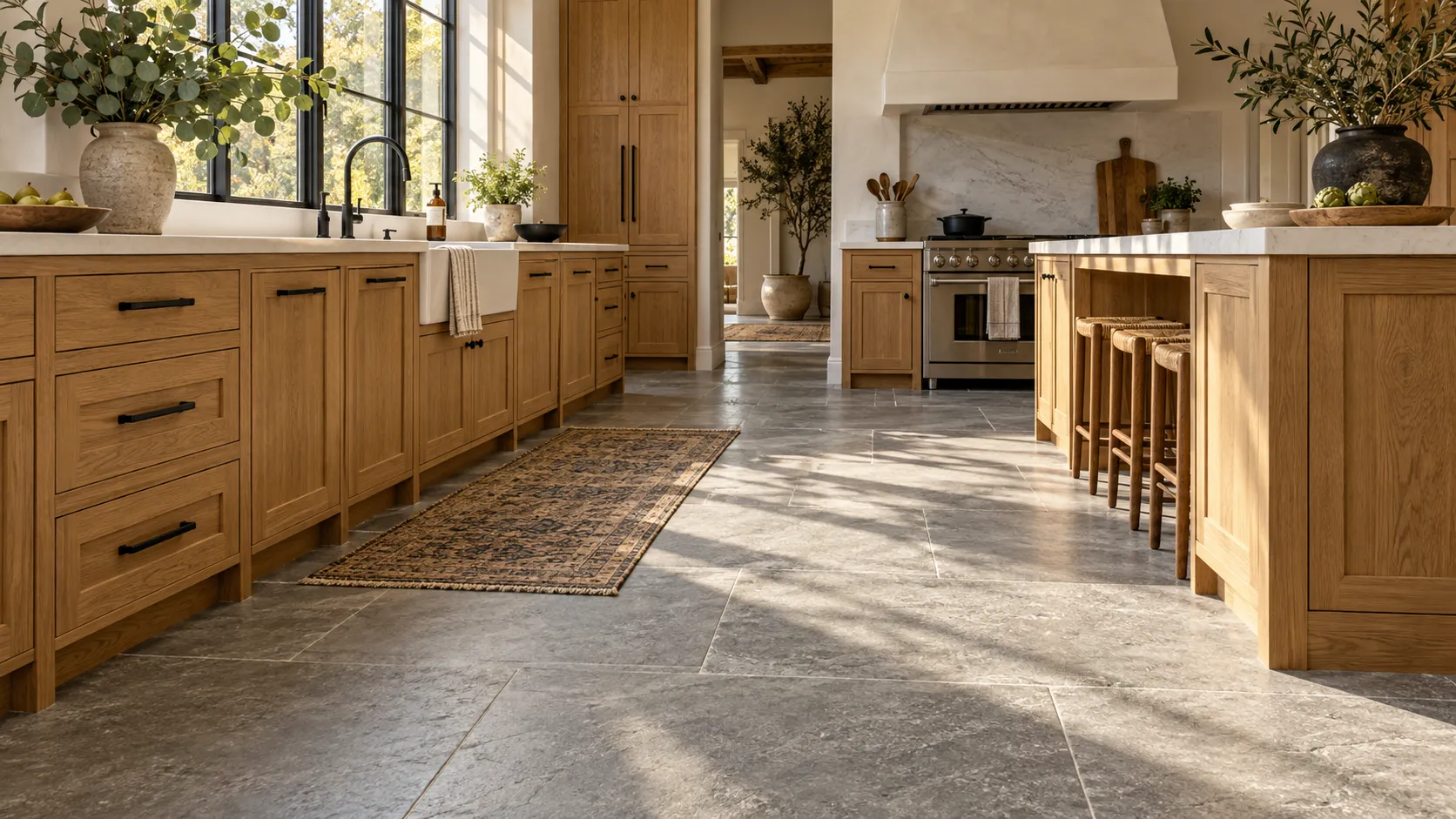
22 Stunning Kitchen Flooring Ideas With Oak Cabinets
Golden oak doors do not mean your kitchen is stuck in the past. Finding the right kitchen flooring ideas with oak cabinets is the fastest secret to calming heavy orange tones without picking up a paintbrush or spending thousands on new cabinetry. Many homeowners assume they have to rip out their sturdy wood cabinets just to get a fresh, modern look. In my experience, the real issue is rarely the woodwork itself. Most of the time, an outdated beige floor is reflecting too much yellow light back onto the doors.
By swapping out what sits underfoot, you can neutralize brassy undertones and make traditional wood grain look rich, custom, and intentional. Inside this guide, you will find 22 practical flooring options ranging from budget vinyl planks to timeless natural stone. You will learn exactly which colors, textures, and grout shades work best so you can walk into your local tile shop with total confidence.
Large Format Gray Limestone
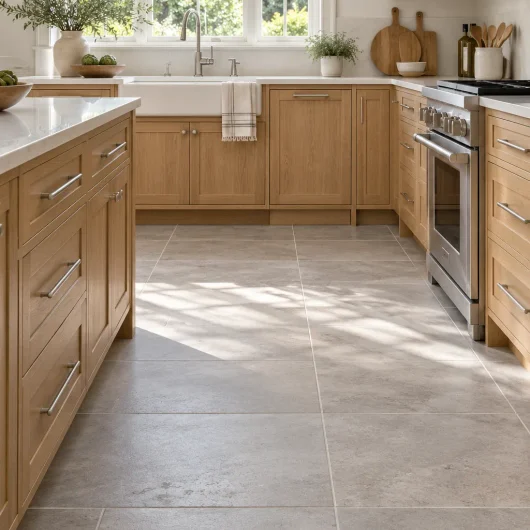
Warm honey oak cabinets often carry strong orange undertones that dominate a room. Pairing them with cool, matte gray limestone tiles immediately balances that heavy visual warmth. In my experience, large 24-by-24-inch tiles work best because fewer grout lines keep the busy wood grain from feeling cluttered or dated.
Select a limestone shade with subtle beige flecks to bridge the gap between cool stone and warm wood. Seal the stone prior to grouting so the porous surface resists cooking oil splatters. Your kitchen instantly feels grounded, calm, and updated without stripping a single cabinet door.
Cream Porcelain Herringbone Tile
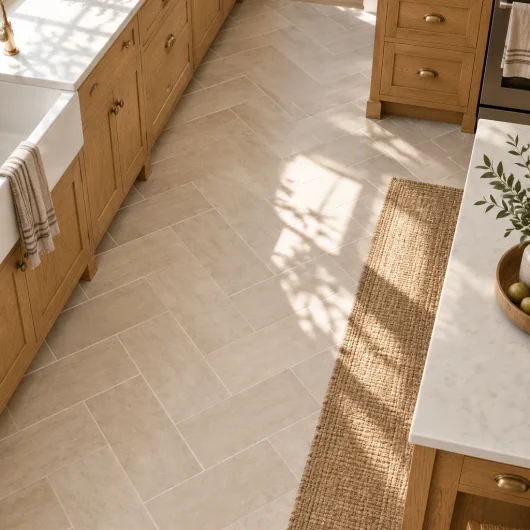
- Creamy off-white porcelain brightens up low-light kitchens where dark oak cabinets might otherwise feel heavy or cave-like.
- The angled herringbone layout draws the eye across the floor rather than focusing solely on older wood cabinetry.
- Matte porcelain resists scratches from dog claws and dropped pots far better than soft natural stone.
- Warm alabaster grout blends into the tile edges so the zigzag pattern remains soft and subtle.
Diagonal tile patterns bring movement to boxy, standard kitchen layouts while softening all the rigid vertical lines of traditional woodwork. Order 15 percent extra tile when shopping for this layout to account for the angled corner cuts. This setup suits busy family kitchens needing high durability.
Wide Plank Whitewashed Oak
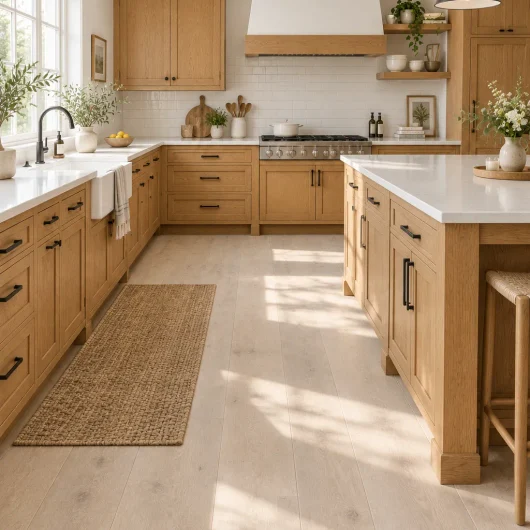
Quick Tip: Always bring three full-sized floor plank samples into your kitchen and view them under both daylight and warm evening bulbs. Whitewashed finishes with pink undertones will clash against yellow oak, so stick strictly to planks with neutral gray or wheat undertones.
Wood-on-wood combinations scare many homeowners, yet pale wide planks create enough contrast to make older cabinets look intentional. Because seven-inch planks have fewer seams than narrow strip flooring, the floor reads as a quiet neutral canvas. I’ve noticed this pairing works especially well in open-concept homes.
Charcoal Slate Tile
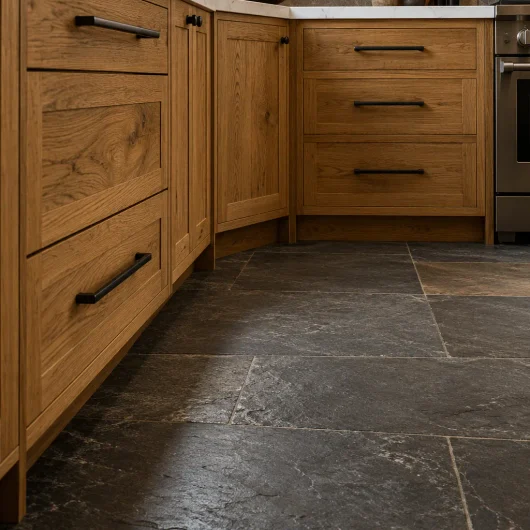
BEFORE: Yellow-toned wood cabinets paired with yellowing linoleum or beige ceramic tile make the entire kitchen look washed out and stuck in the 1990s. Every surface blends into one muddy, amber tone with zero visual depth.
AFTER: Deep charcoal slate anchors the room and turns warm cabinetry into a bold focal point. The dark, moody floor absorbs excess glare and makes golden wood grain look rich and expensive.
High contrast is the fastest secret to modernizing older woodwork without picking up a paintbrush. Deep gray slate hides dirt crumbs effortlessly between sweepings, while its natural cleft texture prevents slips near the sink. Pair this floor with matte black drawer pulls to tie the dark tones together.
Classic Black and White Checkerboard
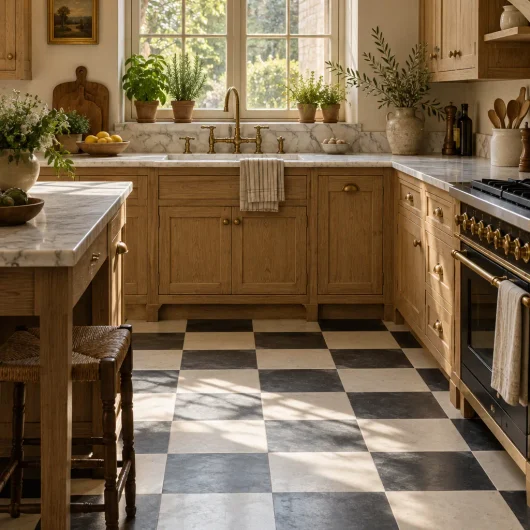
- Measure your kitchen width to choose the right tile scale, using 12-by-12-inch tiles for small rooms and 18-by-18-inch tiles for larger footprints.
- Lay the tiles at a 45-degree diagonal angle to visually widen narrow galley kitchens and break up boxy cabinet lines.
- Choose a chalky, off-white tile rather than stark blue-white so the lighter squares harmonize with warm wood tones.
- Apply a medium gray grout across the entire floor to prevent white lines from staining in high-traffic cooking zones.
Graphic patterns distract the eye from dated cabinet door profiles by giving the room a deliberate vintage personality. When exploring kitchen flooring ideas with oak cabinets, I’ve seen this work well in older homes where modern minimal tiles feel out of place. Stick to matte finishes to hide scuffs.
Warm Terracotta Hexagons
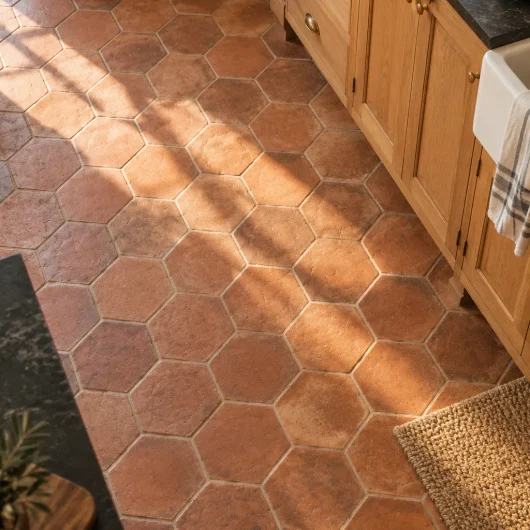
| Feature | Glossy Glazed Red Tile | Matte Natural Terracotta Hexagons |
| Visual Undertone | Clashes with orange wood | Blends earthy clay with warm grain |
| Surface Texture | Slippery and shows every smudge | Soft, chalky grip that hides dust |
| Style Impact | Looks dated and overly shiny | Creates an organic Spanish-revival warmth |
Leaning into warmth rather than fighting it can produce a cozy, sun-baked aesthetic. Six-inch hexagonal clay tiles echo the golden notes in oak while adding playful geometric structure underfoot. Seal authentic terracotta twice before daily use, or choose porcelain lookalikes if you hate routine maintenance.
Light Travertine Stone
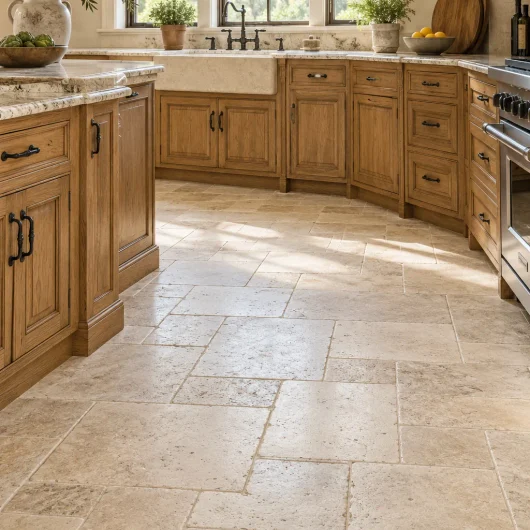
DO:
- Choose tumbled travertine with a matte finish to soften glare from overhead recessed lights.
- Pick cream and pale almond stone shades that sit quietly beside golden wood tones.
- Use a pre-mixed stain-resistant grout in a matching bone color to create a continuous surface.
DON’T:
- Avoid dark gold or orange-veined travertine that blends into the cabinet base and looks muddy.
- Never leave unsealed natural travertine exposed near the dishwasher or stove where grease drops.
- Skip high-gloss polished stone finishes that make older wood doors look dated.
Natural stone with subtle pitting and color variation gives standard builder-grade cabinets an Old World feel. Because travertine carries both cool cream and warm tan notes, it bridges the gap between existing woodwork and fresh white walls. Lay it in an ashlar pattern for extra visual interest.
Greige Luxury Vinyl Plank
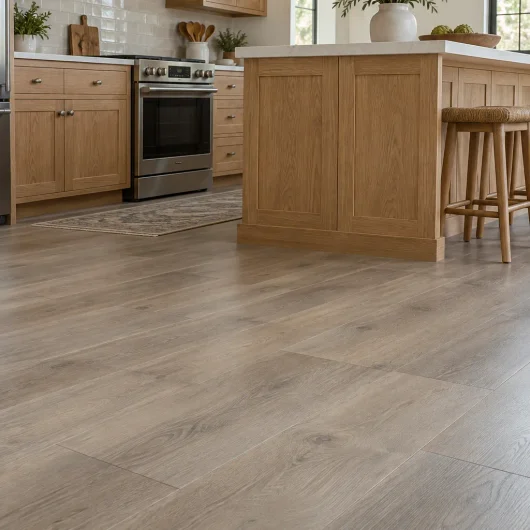
- Cost: Budget-friendly
- Time: One weekend
- Skill Level: Beginner DIY
- Best For: High-traffic family kitchens and pet owners
Rigid core vinyl planks in a balanced gray-beige shade solve the problem of matching real wood to existing cabinets. The cool gray base calms down bright orange oak tones, while the beige warmth prevents the floor from looking cold or sterile. Click-lock edges float right over old linoleum.
Blue and White Patterned Cement
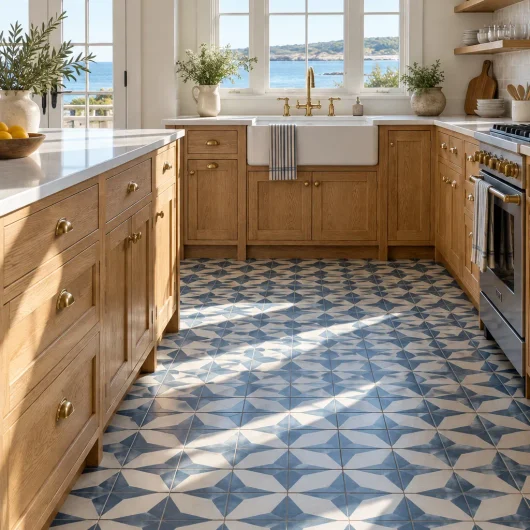
Color theory offers a clever trick for dealing with overly yellow or orange woodwork. Because blue sits directly opposite orange on the color wheel, dusty navy or slate-blue floor tiles neutralize heavy amber tones in oak instantly. The contrast makes both the floor and the cabinets look sharp.
In my experience, muted cornflower or powdery indigo motifs work much better than bright royal blue. Stick to a simple two-tone geometric pattern so the floor does not fight with noticeable wood grain. This bold approach shines brightest in small galley kitchens that need personality.
Should I continue with the next 3 ideas?
Honed Marble Look Porcelain
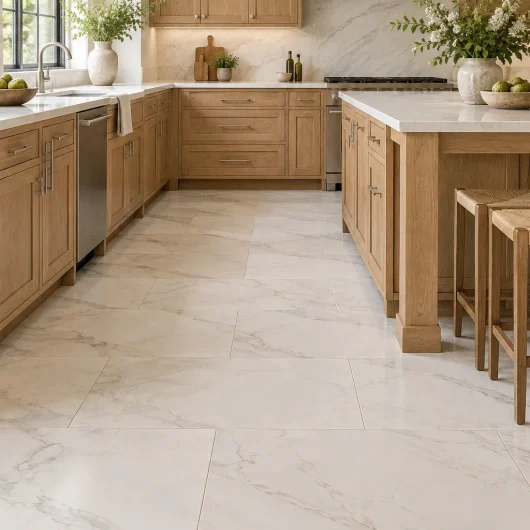
- Soft gray and warm taupe veining pulls together cool stainless steel appliances and warm wooden doors in a single surface.
- Honed matte finishes prevent the blinding glare and slippery puddles common with polished real marble.
- Large 12-by-24-inch rectangular tiles laid in a running bond brick pattern elongate tight, narrow walkways.
- Non-porous porcelain shrugs off spilled red wine, lemon juice, and dropped skillets without etching or staining.
Faux marble porcelain delivers luxury appeal without the high cost or stressful upkeep of quarried stone. Make sure the background color of the tile reads soft milk-white rather than icy blue-white so it complements golden wood grain. Tight sixteenth-inch grout lines keep the floor looking sleek.
Dark Espresso Hardwood
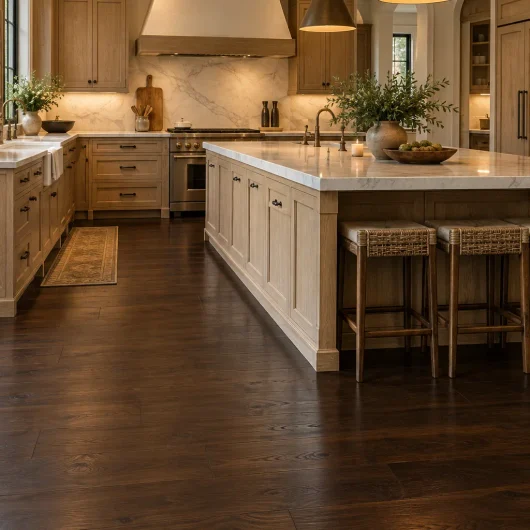
Quick Tip: When pairing two different wood species or stains in one kitchen, aim for a dramatic three-shade difference between the cabinets and the floor. Matching similar medium-brown tones looks like an accidental mismatch, whereas deep espresso against light oak looks deliberate and structured.
Deep chocolate floors ground airy spaces and let light or medium oak cabinetry stand out as a warm feature. Satin polyurethane finishes hide dust and tiny pet scratches far better than high-gloss coats. Add a woven runner in front of the sink to soften the dark expanse.
Polished Concrete Floors
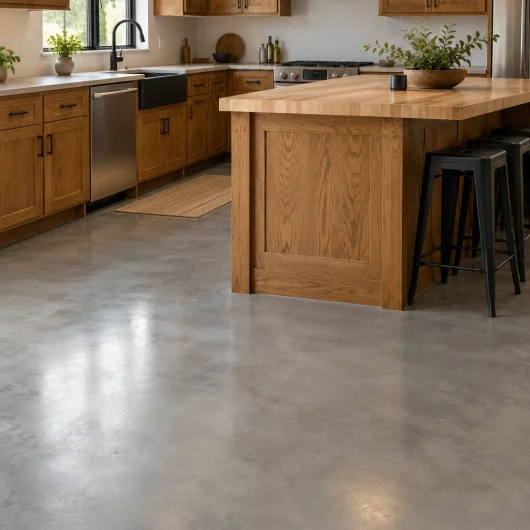
BEFORE: Traditional raised-panel oak doors surrounded by busy speckled granite and small ceramic grid tiles feel visually noisy and cramped. Every square inch competes for attention, making the kitchen look cluttered even when the counters are clear.
AFTER: A seamless, mottled gray concrete floor wipes away visual clutter and gives traditional woodwork a crisp, modern edge. The cool industrial surface turns dated cabinetry into an intentional warm accent.
Seamless flooring removes grout maintenance forever and introduces an unexpected contemporary twist to older homes. If pouring or grinding concrete is not possible over a wood subfloor, oversized micro-cement tiles offer the exact same mottled gray look. Pair with simple black hardware for a cohesive finish.
Should I continue with the next 3 ideas?
Honed Marble Look Porcelain
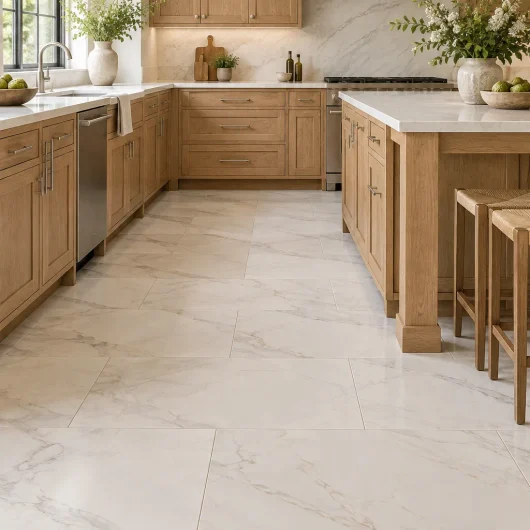
- Soft gray and warm taupe veining pulls together cool stainless steel appliances and warm wooden doors in a single surface.
- Honed matte finishes prevent the blinding glare and slippery puddles common with polished real marble.
- Large 12-by-24-inch rectangular tiles laid in a running bond brick pattern elongate tight, narrow walkways.
- Non-porous porcelain shrugs off spilled red wine, lemon juice, and dropped skillets without etching or staining.
Faux marble porcelain delivers luxury appeal without the high cost or stressful upkeep of quarried stone. Make sure the background color of the tile reads soft milk-white rather than icy blue-white so it complements golden wood grain. Tight sixteenth-inch grout lines keep the floor looking sleek.
Dark Espresso Hardwood
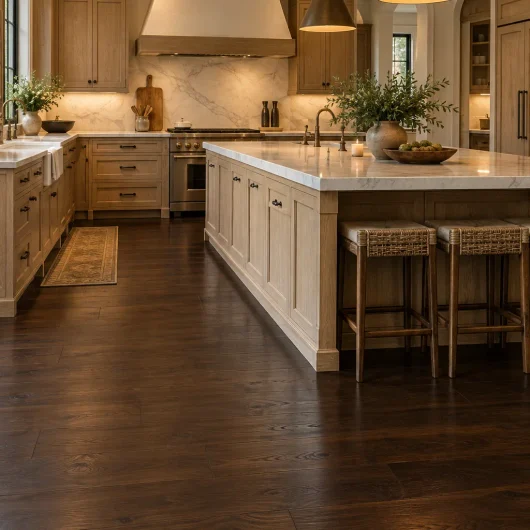
Quick Tip: When pairing two different wood species or stains in one kitchen, aim for a dramatic three-shade difference between the cabinets and the floor. Matching similar medium-brown tones looks like an accidental mismatch, whereas deep espresso against light oak looks deliberate and structured.
Deep chocolate floors ground airy spaces and let light or medium oak cabinetry stand out as a warm feature. Satin polyurethane finishes hide dust and tiny pet scratches far better than high-gloss coats. Add a woven runner in front of the sink to soften the dark expanse.
Polished Concrete Floors
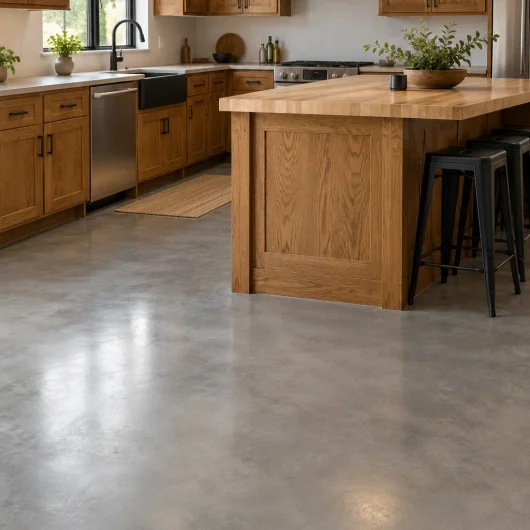
BEFORE: Traditional raised-panel oak doors surrounded by busy speckled granite and small ceramic grid tiles feel visually noisy and cramped. Every square inch competes for attention, making the kitchen look cluttered even when the counters are clear.
AFTER: A seamless, mottled gray concrete floor wipes away visual clutter and gives traditional woodwork a crisp, modern edge. The cool industrial surface turns dated cabinetry into an intentional warm accent.
Seamless flooring removes grout maintenance forever and introduces an unexpected contemporary twist to older homes. If pouring or grinding concrete is not possible over a wood subfloor, oversized micro-cement tiles offer the exact same mottled gray look. Pair with simple black hardware for a cohesive finish.
Should I continue with the next 3 ideas?
Beige Limestone Basketweave
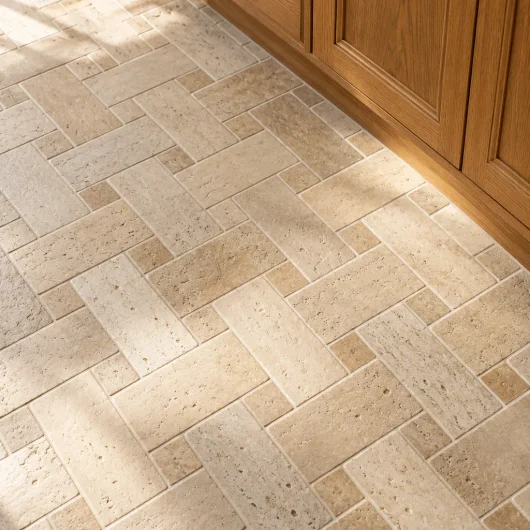
- Style: Classic Traditional
- Maintenance: Moderate (requires annual sealing)
- Grout Choice: Warm almond or sandstone
- Best For: Small or narrow galley kitchens needing subtle texture
Woven tile layouts add subtle richness underfoot without relying on loud colors that clash with golden woodwork. By pairing creamy ivory rectangles with tiny warm taupe accent dots, a basketweave mosaic bridges the gap between bright countertops and honey-toned doors. Keep the finish honed for reliable slip resistance.
Weathered Barnwood Vinyl
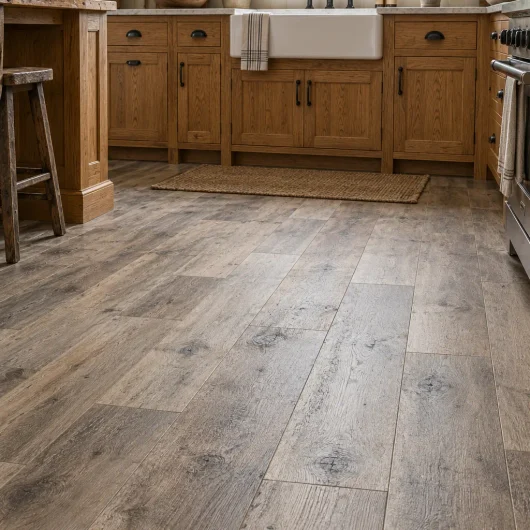
Rustic, multi-toned vinyl planks take the pressure off finding a single exact color match for your woodwork. Because weathered barnwood mixes cool driftwood gray, charcoal knots, and warm chestnut undertones in every plank, it pulls golden cabinets into a cohesive farmhouse palette right away.
In my experience, wide seven-inch planks with painted micro-bevel edges look the most convincing next to real wood doors. The textured matte surface hides dog hair, water droplets, and dropped crumbs better than solid single-color tiles. Snap these waterproof planks directly over uneven subfloors in a single afternoon.
Black Hexagonal Porcelain
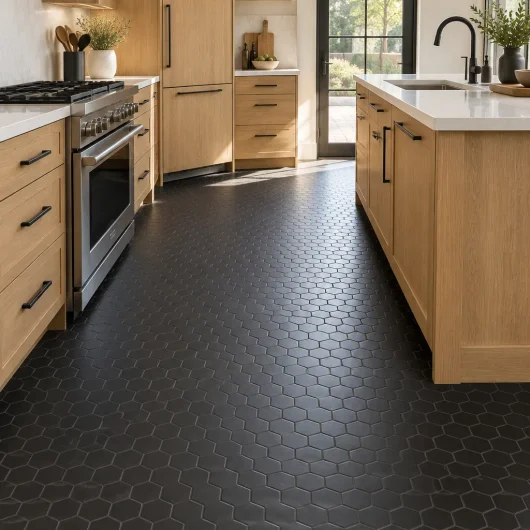
- Small two-inch or four-inch matte black hexagons deliver extra grout lines that provide dependable grip near wet sink zones.
- Dark charcoal grout blends right into the black porcelain edges so the honeycomb grid looks sleek rather than busy.
- Stark black floors absorb excess yellow reflections from overhead bulbs and make natural oak grain pop with clean definition.
- Porcelain resists heavy appliance rollers and dropped cast-iron pans without chipping or showing light-colored core clay.
Graphic black hexagons bring a crisp bistrot edge to basic builder-grade kitchens. While comparing kitchen flooring ideas with oak cabinets, many homeowners worry dark tiles will shrink the room. Under-cabinet LED strips and bright white walls easily bounce enough light around to keep the space feeling open.
Should I continue with the next 3 ideas?
Blonde Maple Hardwood
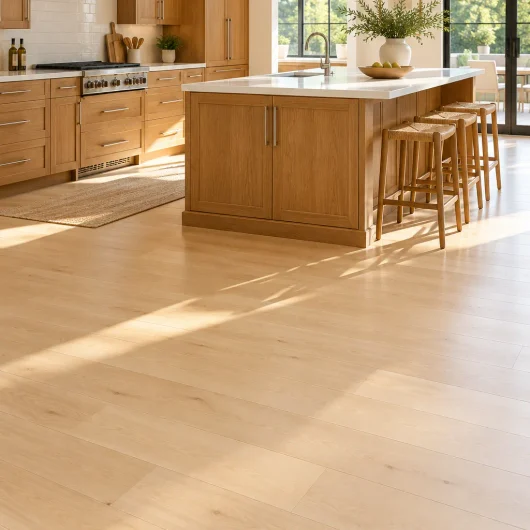
Quick Tip: Select select-grade maple planks with minimal knots and a clear water-based finish rather than an oil-based polyurethane. Oil-based topcoats turn yellow over time, whereas a water-based finish keeps pale maple looking crisp and creamy beside grain-heavy oak doors.
Light-toned maple brightens kitchens that lack big windows while keeping the warmth of real wood underfoot. Because maple has a tight, subtle grain pattern, it never competes visually with the bold cathedral arches found on oak cabinetry. That’s why many experts recommend mixing tight-grained floors with open-grained cabinets.
Rustic Brick Pavers
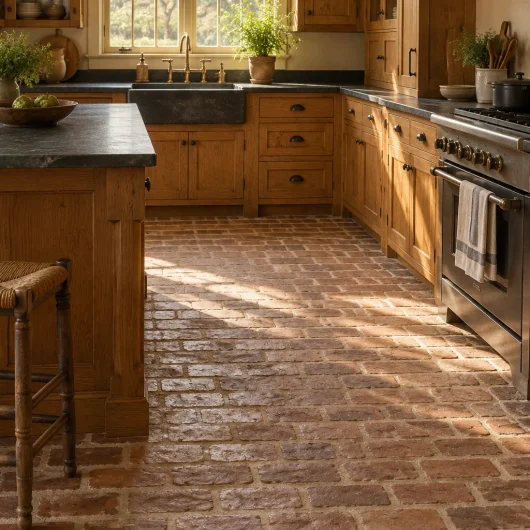
BEFORE: Flat, builder-grade oak cabinets paired with smooth vinyl sheet flooring make a kitchen look sterile, thin, and cheap. The room lacks architectural weight and feels like a temporary rental rather than a custom home.
AFTER: Thin clay brick pavers add immediate historic texture and earthy grounding beneath standard wooden cabinets. The dusty red and taupe clay tones absorb the yellow glare from the wood and give the space timeless European farmhouse character.
Thin brick tiles measure only half an inch thick, allowing installation directly over standard plywood subfloors without raising doorway thresholds. Seal the porous clay and wide mortar joints with a matte penetrating sealer so dropped pasta sauce wipes right up. This rugged surface ages beautifully under heavy foot traffic.
Warm Taupe Porcelain
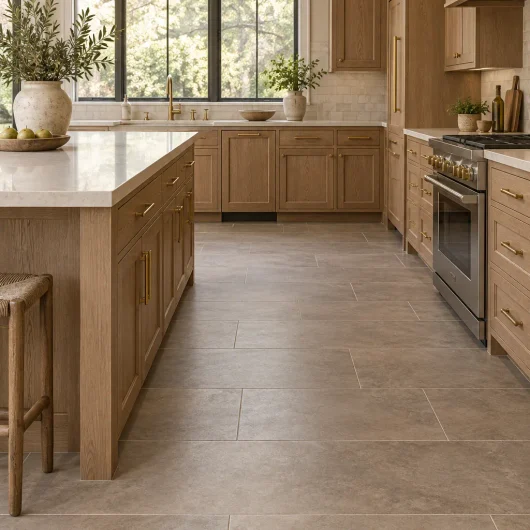
- Hold taupe porcelain samples next to your cabinet doors to ensure the tile has warm mushroom undertones rather than cool purple-gray notes.
- Choose rectified 12-by-24-inch tiles so your installer can lay them with tight eighth-inch grout joints for a continuous look.
- Lay the tiles in a one-third offset pattern rather than a fifty-fifty brick layout to prevent tall tiles from lipping at the corners.
- Fill the joints with matching warm gray grout so dirt and kitchen spills never discolor the lines.
Mushroom-toned porcelain hits the sweet spot between cool gray and warm beige. It calms down golden woodwork without making the kitchen feel cold during dark winter months. If you want a zero-drama surface that survives muddy boots and messy toddlers, matte taupe porcelain delivers effortless daily cleanup.
Should I continue with the next 3 ideas?
Creamy Penny Round Tile
.
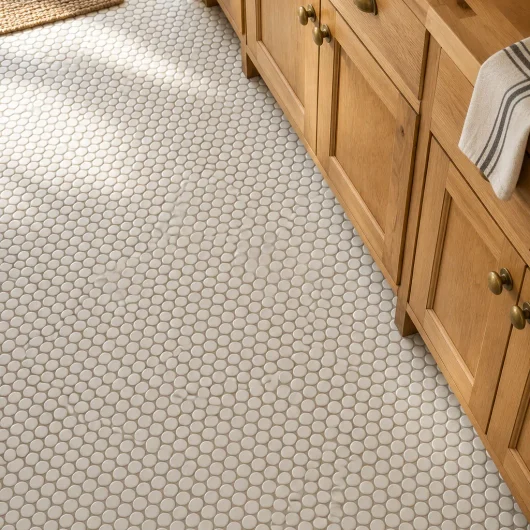
| Feature | Large Square White Ceramic | Creamy Penny Round Mosaic |
| Underfoot Grip | Slippery when wet near the sink | Dense grout grid prevents slipping |
| Style Vibe | Can look sterile or builder-grade | Adds charming vintage cottage texture |
| Visual Contrast | Stark glare against oak grain | Softens straight lines of boxy cabinets |
Tiny circular tiles introduce playful curves that break up all the rigid rectangles in a traditional wood kitchen. When narrowing down kitchen flooring ideas with oak cabinets, I’ve seen this work well in smaller rooms where oversized tiles require awkward cuts around islands and appliances. Seal the grout lines thoroughly to keep the mosaic fresh.
CONCLUSION
Updating your space does not require tearing out solid woodwork that still has plenty of life left in it. With these kitchen flooring ideas with oak cabinets, you have all the visual tools needed to balance warm wood grain and build a room that feels bright, grounded, and welcoming. I’ve seen how small changes like testing floor samples in both morning and evening light can completely shift the way a space feels. Pick up two or three sample tiles this weekend and test them right against your toe-kick. Save this post to your favorite Pinterest remodel board for quick reference while shopping, and share it with a friend who is planning their own kitchen refresh!