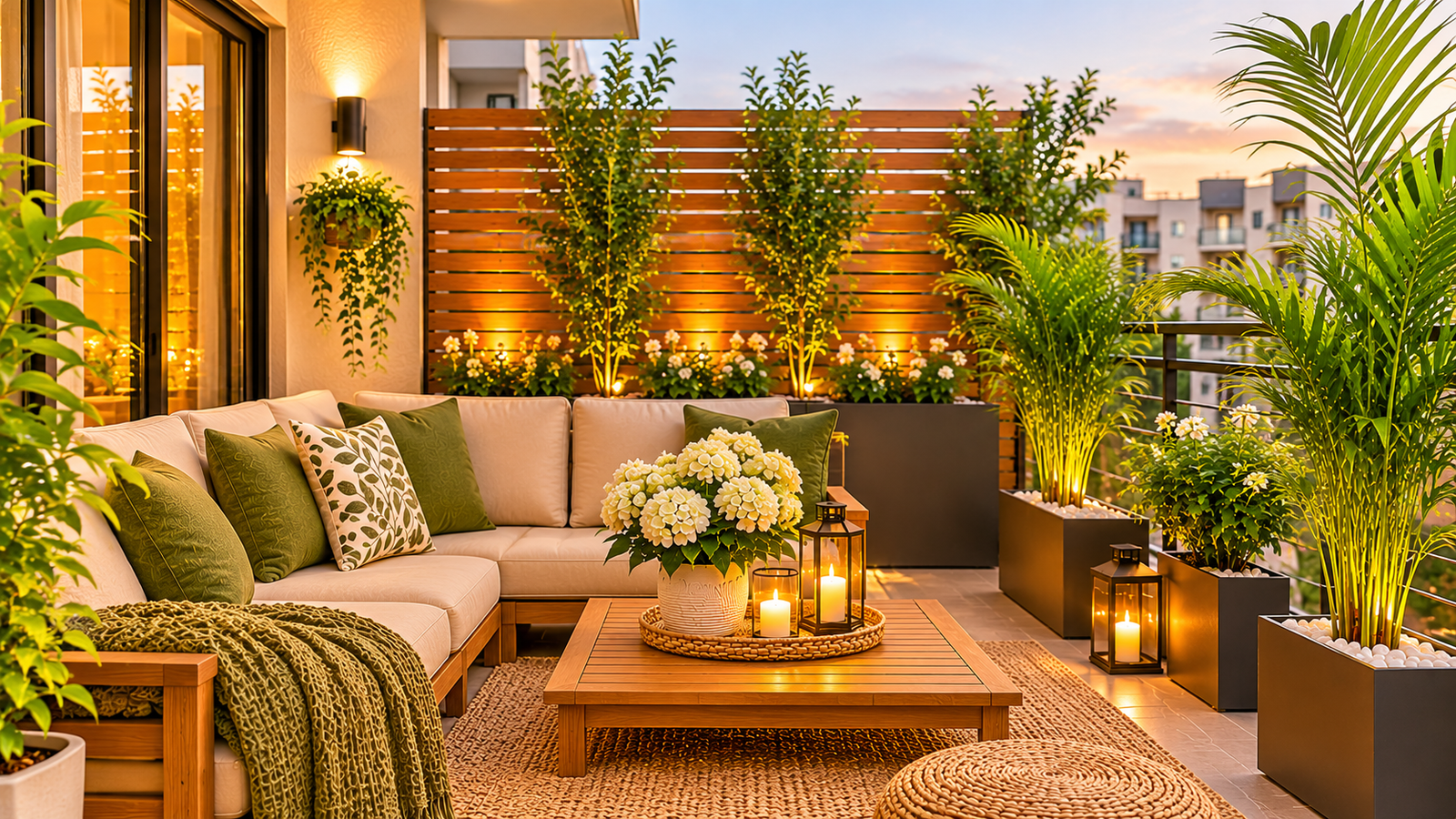
23 Apartment Patio Privacy Ideas for a Serene Escape
Your apartment patio should feel like a peaceful escape, not a space where neighboring windows make you uncomfortable. A little privacy can make all the difference!
These apartment patio privacy ideas will help you turn an exposed balcony or small outdoor area into a cozy, relaxing retreat. From natural bamboo screens and tall potted plants to flowing outdoor curtains and stylish wooden panels, there are plenty of ways to create a more secluded space without sacrificing its beauty.
Whether you’re decorating a rental apartment, working with a tight budget, or simply looking for more personal space, you’ll find practical inspiration for different layouts and styles. I’ve noticed that combining greenery with simple privacy screens often creates the warmest results. Get ready to discover ideas that make your outdoor space feel more comfortable, inviting, and uniquely yours.
1. Bamboo Privacy Screens
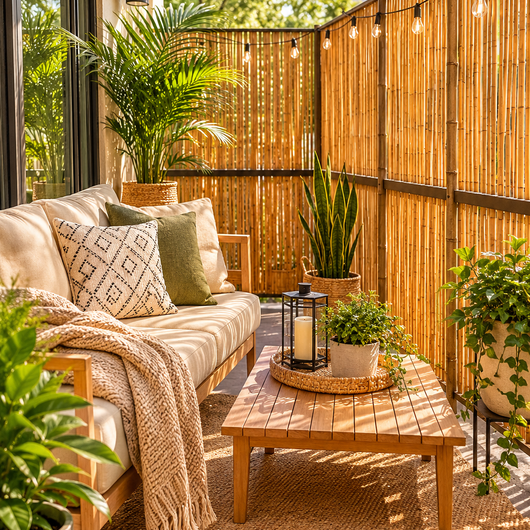
Bamboo screens offer a natural-looking solution when neighboring balconies feel a little too close. Their warm texture creates a comfortable boundary without making a small outdoor area feel closed off. Choose roll-up bamboo panels or freestanding screens that fit your patio dimensions.
For a polished look, secure the panels to an approved railing or sturdy frame using weather-resistant fasteners. Place a few leafy plants along the bottom to soften the edges. Bamboo works especially well with wooden furniture, woven accessories, and earthy outdoor colors.
2. Outdoor Privacy Curtains
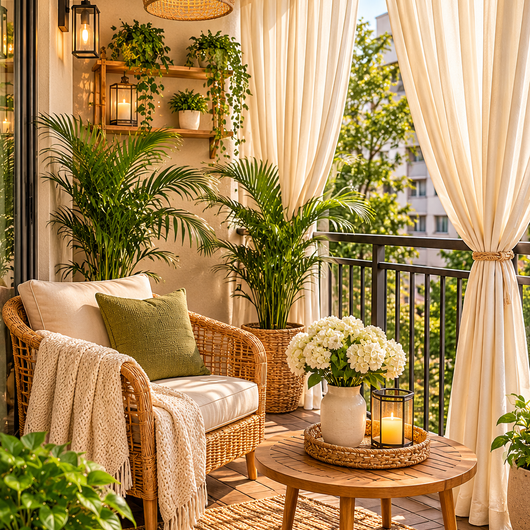
Soft curtains can make an exposed balcony feel like a private outdoor room. Choose weather-resistant outdoor fabric in white, cream, or light beige to create a bright and relaxing atmosphere while blocking direct views from nearby apartments.
- Choose outdoor fabric: Look for UV-resistant and quick-drying materials.
- Install a curtain track: Use a sturdy rod or approved ceiling-mounted system.
- Add tiebacks: Keep curtains neatly secured when privacy is not needed.
- Select suitable lengths: Let the fabric hang close to the floor without dragging.
- Consider the wind: Use weighted hems or secure tiebacks to prevent excessive movement.
For extra flexibility, install curtains on two or three sides of the seating area. You can open them during pleasant mornings and close them when neighbors are outside. Always check building rules before drilling into ceilings or exterior walls.
3. Tall Potted Plants
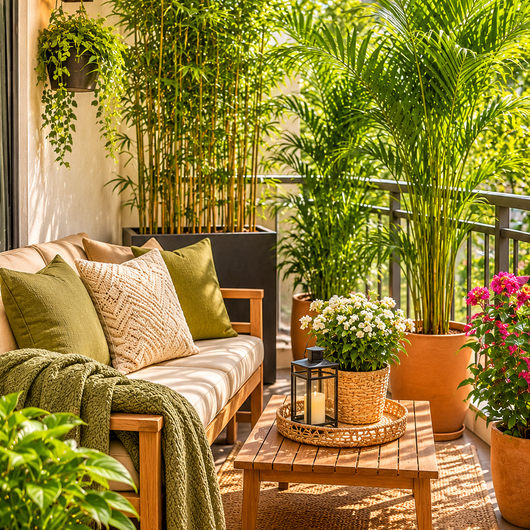
Lush greenery creates a refreshing screen while making your balcony feel more connected to nature. Tall potted plants are especially useful when you need to block direct views without installing permanent structures.
Choose plants according to your available sunlight and local climate. Areca palms, clumping bamboo, and tall ornamental grasses can provide good coverage when grown in suitable containers. Arrange the tallest plants along exposed railing sections and place shorter varieties near seating areas.
For better results, use heavy, weather-resistant planters with drainage holes. Keep containers stable in windy conditions, and leave enough room to water and maintain each plant comfortably. A layered arrangement provides privacy while keeping the patio open and inviting.
4. Retractable Privacy Screens
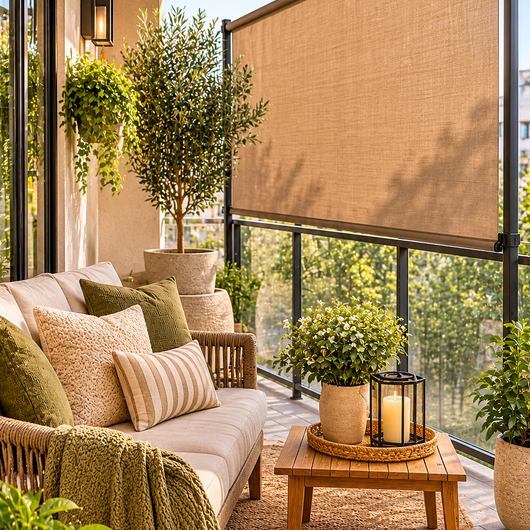
An adjustable screen gives you privacy exactly when you need it without permanently closing off your balcony. Unlike fixed panels, retractable designs can be extended during busy afternoons and rolled away when you want an open view.
BEFORE: The balcony feels exposed, especially when neighbors can easily see your seating area. Bright sunlight and nearby windows make relaxing outdoors less comfortable.
AFTER: A retractable screen creates a flexible boundary that blocks unwanted views. You can extend it for quiet mornings or private evening dinners and retract it whenever you want more natural light.
Choose UV-resistant fabric and a sturdy mounting system suitable for outdoor use. Check your apartment’s installation rules before attaching anything to the exterior.
5. Wooden Slat Privacy Panels
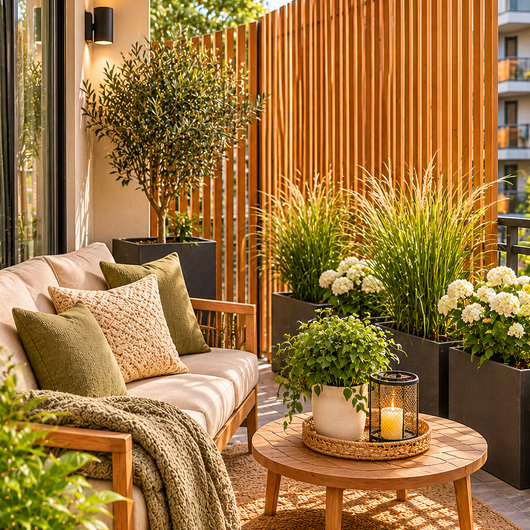
Vertical wooden slats bring architectural character to an otherwise ordinary apartment balcony. Their narrow gaps allow some sunlight and airflow while reducing direct sightlines from neighboring windows and patios.
- Measure the area: Identify the exposed side of your balcony and measure its height and width.
- Choose suitable wood: Select weather-resistant timber or outdoor-rated composite slats.
- Plan the spacing: Use consistent gaps to balance privacy and airflow.
- Secure the frame: Attach the panels using an approved freestanding or railing-mounted support system.
Natural wood pairs beautifully with black metal furniture, cream cushions, and green plants. For easier maintenance, consider sealed timber or wood-look composite materials that can handle outdoor exposure.
6. Frosted Glass Privacy Panels
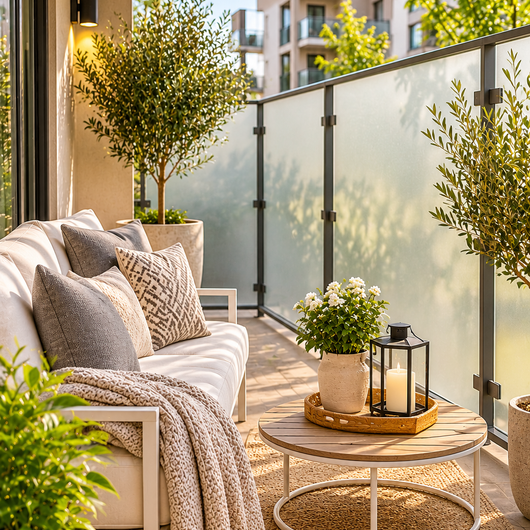
Frosted glass offers a clean solution when you want privacy without sacrificing natural daylight. Its translucent surface obscures direct views while allowing sunlight to reach your seating area.
| Feature | Option A: Clear Glass | Option B: Frosted Glass |
| Privacy | Limited | Better visual coverage |
| Natural light | Excellent | Excellent |
| Appearance | Open and transparent | Soft and subtle |
| Maintenance | Shows fingerprints | Can show water marks |
| Best for | Unobstructed views | More secluded balconies |
For apartment patios, frosted acrylic panels or professionally installed outdoor-rated glass can provide a similar visual effect. Always check railing regulations and use materials designed for outdoor conditions. A simple panel design also works beautifully with minimalist furniture and uncluttered decor.
7. Hanging Planter Privacy Wall

A wall of hanging greenery can turn an overlooked balcony corner into a refreshing private retreat. Instead of filling the floor with large pots, use vertical space to create a leafy screen that blocks neighboring views.
DO:
- Install sturdy wall-mounted or railing-mounted planter holders.
- Combine trailing pothos, ivy, and compact ferns for layered coverage.
- Choose lightweight containers with proper drainage.
- Arrange plants at different heights to fill visible gaps.
DON’T:
- Overload balcony railings with heavy containers.
- Choose plants without considering available sunlight.
- Allow excess watering to drip onto neighboring balconies.
- Use weak hooks that cannot support mature plants.
I’ve noticed that combining hanging greenery with a few taller floor plants creates a much fuller appearance than using identical planters. Keep the arrangement slightly varied for a natural garden effect.
8. Outdoor Lattice Panels
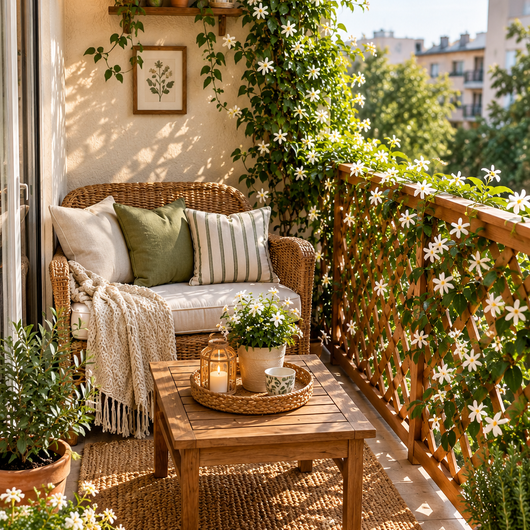
Cost: Low to moderate, depending on material and size.
Time: Approximately 1 to 3 hours for a simple setup.
Skill Level: Beginner to intermediate.
Best For: Narrow balconies, exposed corners, and climbing plants.
Lattice panels offer a decorative way to soften an open balcony while creating partial privacy. Their open framework allows air and sunlight to pass through, making them useful for patios that would feel too enclosed with solid screens.
Choose wood or weather-resistant vinyl lattice in a color that complements your outdoor furniture. Attach lightweight climbing plants using small garden ties as they grow. Star jasmine, clematis, and suitable climbing vines can gradually fill the openings. Keep the panel securely supported and avoid allowing mature plants to become too heavy for the structure.
9. Outdoor Bamboo Blinds
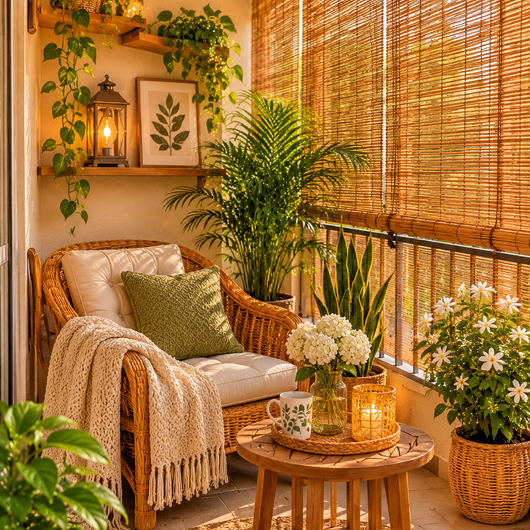
Sometimes, a simple roll-down blind is all a balcony needs to feel more comfortable. Bamboo blinds provide adjustable coverage while maintaining a natural outdoor appearance.
Measure the exposed opening carefully before purchasing. Choose outdoor-rated blinds with sturdy cords and mounting hardware designed for your balcony structure. Install them so they can roll up neatly when you want an unobstructed view.
For a coordinated look, pair honey-colored bamboo with cream textiles, wooden furniture, and leafy plants. Keep the blinds secured during strong winds, and check building restrictions before attaching hardware to exterior surfaces.
10. Outdoor Trellis With Vines

A climbing trellis can create a beautiful green boundary without taking up much floor space. It works especially well on narrow apartment balconies where every inch matters.
- Select a suitable trellis: Choose weather-resistant wood, vinyl, or powder-coated metal.
- Position it strategically: Place it beside exposed seating areas or along an open railing.
- Add climbing plants: Consider jasmine, clematis, or other vines suited to your climate.
- Guide the growth: Use soft garden ties to direct stems across the framework.
- Maintain the coverage: Trim overgrown branches and replace unhealthy plants when needed.
For faster coverage, choose established climbing plants rather than starting with tiny seedlings. A filled trellis provides a softer, more natural screen while adding greenery and visual interest to your outdoor space.
11. Outdoor Folding Screens
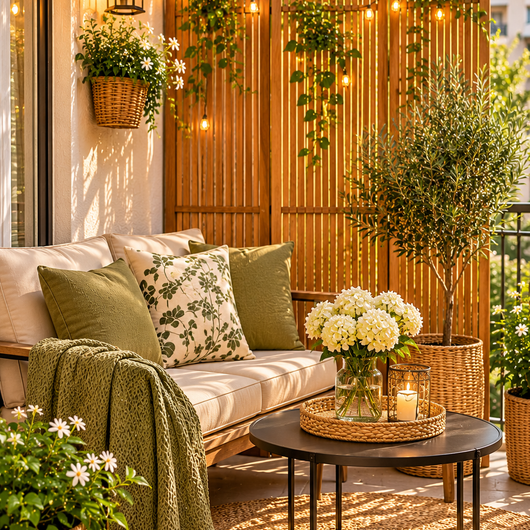
A folding screen is a practical choice when you need privacy without making permanent changes to your apartment. Its movable design allows you to adjust coverage depending on how you use the patio.
Quick Tip:
Choose a lightweight folding screen with weather-resistant materials and a wide, stable base. Position it near your seating area rather than covering the entire balcony, so the space remains bright and comfortable.
Wooden screens create a warm natural appearance, while woven resin or outdoor-rated fabric designs offer a lighter look. I’ve seen folding screens work particularly well in rental apartments because they can be moved indoors or repositioned whenever necessary. Secure the screen against strong winds and avoid placing it where it blocks doors or walking paths.
12. Outdoor Privacy Umbrella

BEFORE: An exposed balcony offers little protection from overlooking windows or strong direct sunlight. The seating area feels uncomfortable during bright afternoons, making it harder to enjoy outdoor time.
AFTER: A large outdoor umbrella creates a shaded overhead boundary and reduces some direct sightlines from upper neighboring balconies. The patio feels more comfortable while retaining an open, airy layout.
Choose a tilting or cantilever umbrella if your balcony has limited floor space. A neutral canopy in beige, taupe, or soft gray blends easily with most outdoor furniture. Use a suitable weighted base, check balcony load limits, and close the umbrella whenever strong winds are expected.
13. Artificial Greenery Panels
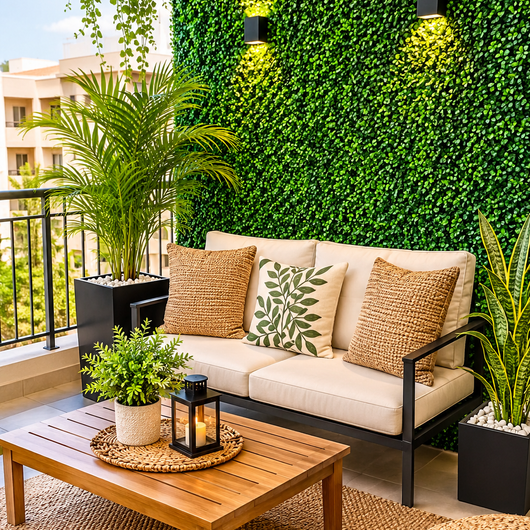
A faux greenery wall gives your balcony a lush, garden-like appearance without requiring regular watering or plant care. It is especially useful when natural plants struggle because of limited sunlight or busy schedules.
- Measure the exposed area: Determine how much railing or wall coverage you need.
- Choose dense panels: Look for UV-resistant artificial foliage with realistic leaf textures.
- Select a suitable backing: Use outdoor-rated panels designed for your installation surface.
- Attach securely: Follow the manufacturer’s mounting instructions and apartment regulations.
- Finish the edges: Add matching greenery or planters to create a more natural appearance.
I’ve noticed that mixing artificial foliage with a few real potted plants makes these screens look more convincing. Choose varied leaf shapes rather than a completely uniform green surface for a softer, more realistic finish.
14. Outdoor Privacy Pergola

A small pergola can create a defined outdoor room while offering additional privacy from surrounding apartments. Its overhead structure provides a place to hang curtains, outdoor fabric panels, or climbing greenery.
Option A: Open Pergola
- Allows plenty of sunlight and airflow.
- Creates a light, spacious appearance.
- Works well with hanging plants and climbing vines.
Option B: Covered Pergola
- Provides more shade and overhead coverage.
- Offers space for outdoor curtains.
- Creates a more enclosed seating area.
For apartment patios, select a compact freestanding pergola that fits the available space. Check building regulations, wind exposure, and balcony weight limits before installation. Keep the structure stable and avoid attaching it to exterior walls without permission.
15. Woven Outdoor Privacy Panels
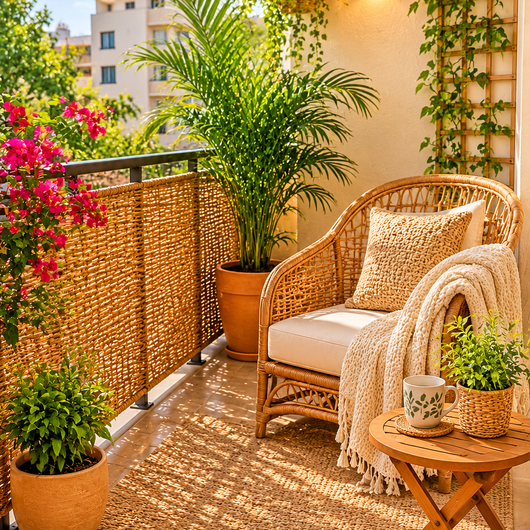
Woven panels bring warmth and texture to a small balcony while reducing direct views from nearby spaces. Their natural appearance works particularly well with bohemian, coastal, and rustic outdoor decor.
DO:
- Choose weather-resistant synthetic wicker or outdoor-rated woven materials.
- Measure the railing before purchasing panels.
- Match the woven color with your furniture and planters.
- Secure panels with approved outdoor fasteners.
DON’T:
- Use delicate indoor baskets as permanent outdoor screens.
- Leave loose edges that can catch strong winds.
- Block drainage openings or essential railing access.
- Choose materials that cannot withstand your local weather.
A combination of woven panels, soft beige cushions, and leafy plants creates a warm, relaxed atmosphere. For a small patio, covering just the most exposed railing section can provide useful privacy without making the entire area feel enclosed.
16. Outdoor Privacy Hedge
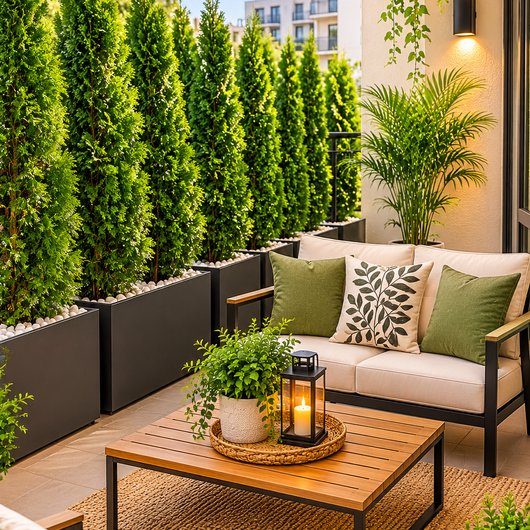
Best For: Balconies with long exposed railings.
Cost: Moderate, depending on plant size and planter selection.
Maintenance: Regular watering, trimming, and occasional repotting.
Plant Options: Dwarf evergreen shrubs, compact arborvitae, and suitable columnar plants.
A row of dense greenery creates a natural boundary that feels softer than solid privacy panels. Choose upright plants that grow well in containers and suit your local climate. Place them in matching rectangular planters to create a continuous appearance along the railing. Leave enough space between containers for watering and maintenance. If your balcony receives limited sunlight, select shade-tolerant varieties instead of sun-loving shrubs. Keep the planters stable and check balcony weight restrictions before creating a long hedge.
17. Privacy With Outdoor Shelving
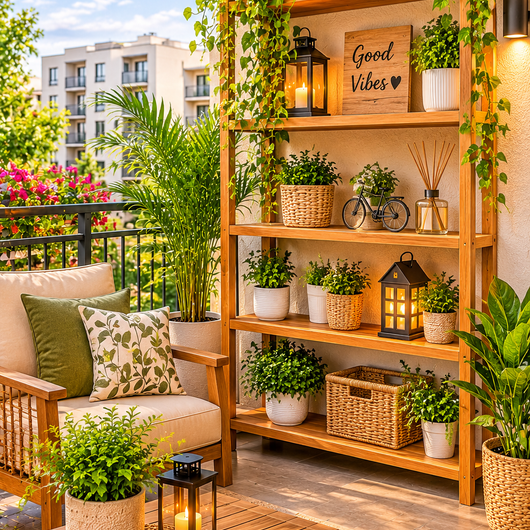
An outdoor shelving unit can provide privacy and extra storage at the same time. Instead of leaving the balcony corner completely exposed, use a tall shelf to create a functional visual barrier.
- Choose the right shelf: Select weather-resistant wood, metal, or outdoor-rated resin.
- Check the height: Pick a unit tall enough to interrupt direct sightlines from nearby balconies.
- Arrange larger items: Place leafy plants and storage baskets on the most exposed side.
- Add decorative layers: Use smaller pots, lanterns, and outdoor accessories to fill empty spaces.
- Secure the structure: Stabilize the shelf according to the manufacturer’s instructions.
Keep heavier items on lower shelves to improve stability. Avoid overcrowding the unit, as a balanced arrangement allows light and airflow to move through the space. This setup is especially useful for small patios that need both organization and privacy.
18. Outdoor Privacy Shade Sail

A shade sail offers a stylish way to reduce overhead visibility while protecting your seating area from harsh sunlight. Its lightweight fabric creates a soft architectural feature without requiring a bulky roof structure.
| Feature | Option A: Standard Shade Sail | Option B: Adjustable Shade Sail |
| Coverage | Fixed coverage | Flexible coverage |
| Installation | Fixed anchor points | Adjustable mounting system |
| Appearance | Clean and minimal | More adaptable |
| Maintenance | Occasional cleaning | Cleaning and adjustment |
| Best For | Consistent shade | Changing sunlight conditions |
Choose UV-resistant, breathable outdoor fabric in beige, cream, or light gray. Measure the available area before purchasing and make sure the attachment points are approved for your building. A properly positioned sail can make an exposed patio feel more secluded while keeping the overall design light and uncluttered.
19. Outdoor Privacy Wall
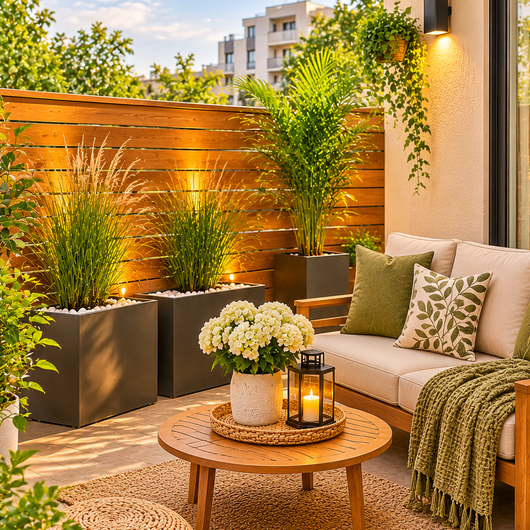
A dedicated privacy wall can make an exposed apartment patio feel more like a separate outdoor room. It works especially well when neighboring windows directly overlook your seating area.
DO:
- Choose weather-resistant wood, composite, or outdoor-rated panels.
- Position the wall along the most exposed side.
- Match the finish with your existing balcony furniture.
- Keep enough open space for comfortable movement.
DON’T:
- Build a wall without checking apartment regulations.
- Block required emergency access or drainage.
- Use unstable panels that could fall in strong winds.
- Make the structure unnecessarily tall or bulky.
For a softer appearance, combine a simple wooden wall with tall ornamental grasses and neutral outdoor furniture. A partial barrier is often enough to create a comfortable seating corner without making a small balcony feel boxed in.
20. Climbing Plant Privacy Arch
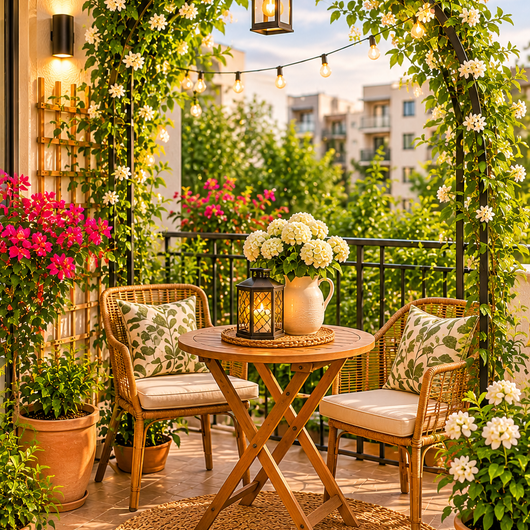
A climbing plant arch adds vertical greenery while creating a beautiful sense of separation around your seating area. It works particularly well at the entrance to a small patio lounge or beside an exposed corner.
- Select a compact arch: Choose a sturdy metal or weather-resistant wooden design.
- Position it carefully: Place it where it can frame your seating area without blocking access.
- Choose climbing plants: Consider jasmine, clematis, or suitable flowering vines.
- Guide the stems: Attach young growth to the arch using soft garden ties.
- Maintain the shape: Prune regularly to prevent excessive growth and overcrowding.
An arch will not provide complete privacy immediately, so allow time for the plants to grow. For quicker coverage, combine it with a nearby trellis or tall potted plants. The result is a decorative green entrance that makes a small balcony feel more garden-like.
21. Outdoor Privacy Dividers
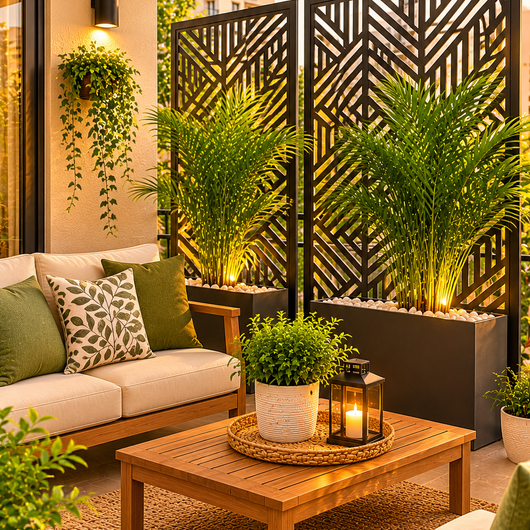
Cost: Moderate, depending on material and design.
Time: Approximately 30 minutes to 2 hours for a ready-made setup.
Skill Level: Beginner.
Best For: Creating separate seating and dining areas.
Freestanding dividers offer a flexible way to separate different sections of your apartment patio. Use one beside a lounge chair or position two panels around a small dining corner to reduce direct views from neighboring spaces.
Choose geometric metal screens for a contemporary look or wooden dividers for a warmer atmosphere. Make sure each panel has a stable base and is suitable for outdoor conditions. You can also place a planter beside the divider to soften its edges. This arrangement provides useful visual separation without requiring permanent construction.
22. Outdoor Privacy Planter Boxes
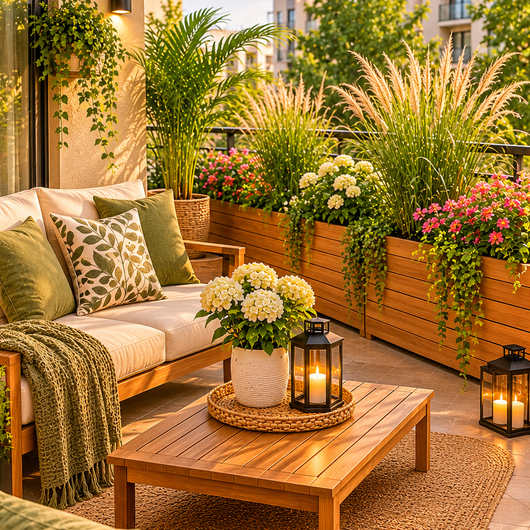
Long planter boxes provide a practical combination of greenery, decoration, and visual privacy. Instead of scattering small pots around the balcony, arrange several rectangular containers along the exposed railing to create a more continuous screen.
- Choose deep containers: Select boxes that provide enough room for healthy root growth.
- Select upright plants: Ornamental grasses, clumping bamboo, and suitable evergreen varieties offer good coverage.
- Mix plant heights: Combine taller plants with shorter flowering varieties for a layered appearance.
- Add drainage: Make sure each planter has drainage holes and suitable potting soil.
- Secure the boxes: Use stable floor placement or approved railing supports.
For a cohesive design, choose matching wooden, charcoal, or terracotta planters. Keep the arrangement proportionate to your balcony and check its weight capacity before filling large containers with soil.
23. Cozy Outdoor Privacy Nook
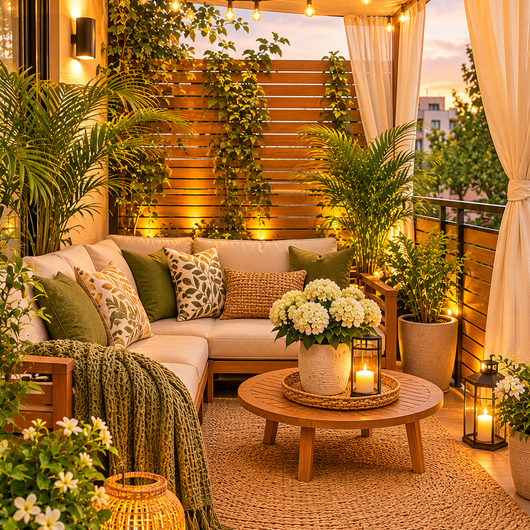
Sometimes, the most inviting patio is one designed around a small, comfortable seating corner. Combining different privacy elements creates a layered space that feels more personal without requiring a complete balcony renovation.
BEFORE: The seating area is exposed to neighboring windows, and the open railing makes the patio feel disconnected from the rest of the home. There is little visual separation or sense of comfort.
AFTER: Tall plants, a wooden screen, and lightweight outdoor curtains create a cozy private corner. Soft cushions, warm lighting, and a small coffee table make the area feel like an outdoor living room.
Start with the most exposed side and add one privacy feature at a time. Keep the center open for easy movement and choose weather-resistant accessories. Even a small apartment balcony can become a peaceful retreat with thoughtful layering.
Conclusion
Creating a private apartment patio doesn’t require a major renovation or a huge budget. Small additions like bamboo screens, outdoor curtains, hanging plants, and decorative dividers can make your space feel more comfortable and welcoming.
These apartment patio privacy ideas offer plenty of inspiration for turning an exposed balcony into a peaceful outdoor retreat. Start with one solution that suits your space, then add personal touches as you go.
Save your favorite ideas on Pinterest, try a setup that inspires you, and share this article with someone who could use a little more privacy outdoors. Your cozy escape starts with one simple change!